
Günther Uecker (1930 Wendorf, Germany), is a German sculptor, Op artist, and installation artist, internationally renowned for his innovative use of nails, light, and kinetic elements. Uecker studied at Wismar, the art school in Berlin-Weißensee, and later at the Kunstakademie Düsseldorf under Otto Pankok. In 1960, he joined the avant-garde ZERO group with Heinz Mack and Otto Piene, a movement dedicated to a new beginning in art as a reaction against German Informel.
During the early 1960s, Uecker explored light, optical phenomena, and oscillating structures, often engaging viewers directly so that their movement or touch could influence the artwork. With Mack and Piene, he created collaborative projects including the ‘Salon de Lumière’ at the Palais des Beaux-Arts in Paris and similar installations in Krefeld and Frankfurt, emphasizing interactivity and perception.
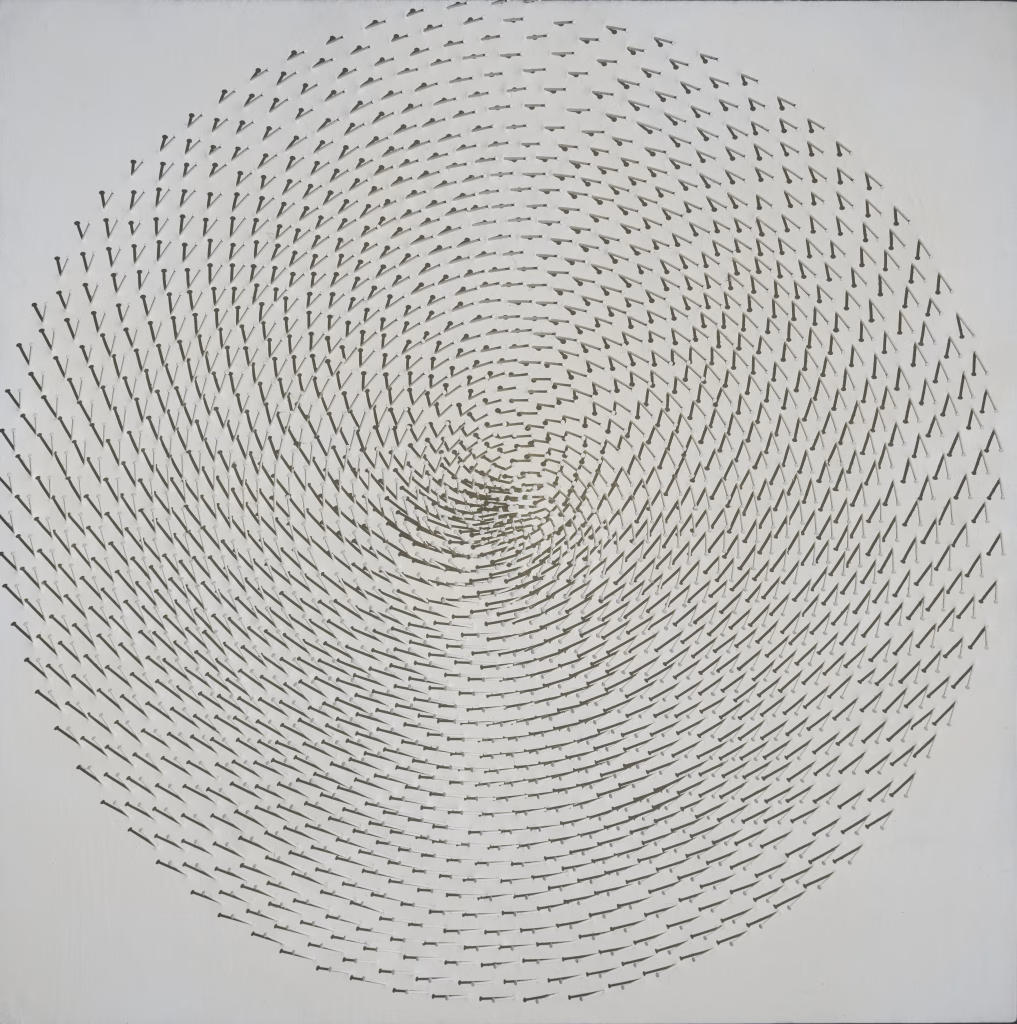
From 1966 onward, nails became Uecker’s signature medium. Initially applied to furniture, musical instruments, and household objects, nails evolved into central elements of his work, often combined with light and kinetic effects to produce the illusion of movement. Notable examples include his a-x Zero Garden (1966) in the Honolulu Museum of Art. His installations frequently incorporate natural materials such as sand and water, reinforcing the tactile and sensory dimension of his work.
Uecker’s practice spans painting, object art, installations, stage design, and film, reflecting a lifelong engagement with both European avant-garde traditions and Asian philosophies of space and perception. His career reached a major milestone in 2000 with the design of the prayer room for the rebuilt Reichstag in Berlin, a work synthesizing light, texture, and contemplation.
From 1974 to 1995, Uecker taught at the Kunstakademie Düsseldorf, becoming professor in 1976. In 2008, together with Otto Piene, Heinz Mack, and Mattijs Visser, he co-founded the International ZERO Foundation, dedicated to preserving and promoting the legacy of the ZERO movement. His works are held in major collections worldwide and continue to be featured in leading exhibitions and fairs, affirming his status as one of the most influential post-war European artists.
For information on available works by the artist, please contact the gallery.