
Emilio Vedova (1919 – 2006 Venice, Italy) was one of the leading figures of Italian post-war abstraction and a pivotal voice in European Informal Art.
Born in Venice, Vedova grew up immersed in the artistic and cultural heritage of his city, which informed his early engagement with painting. In the 1930s, he began experimenting with expressionist and figurative styles, but by the 1940s he had turned decisively toward abstraction, influenced by the upheavals of war and the urgent need to express the psychological and social tensions of his time.
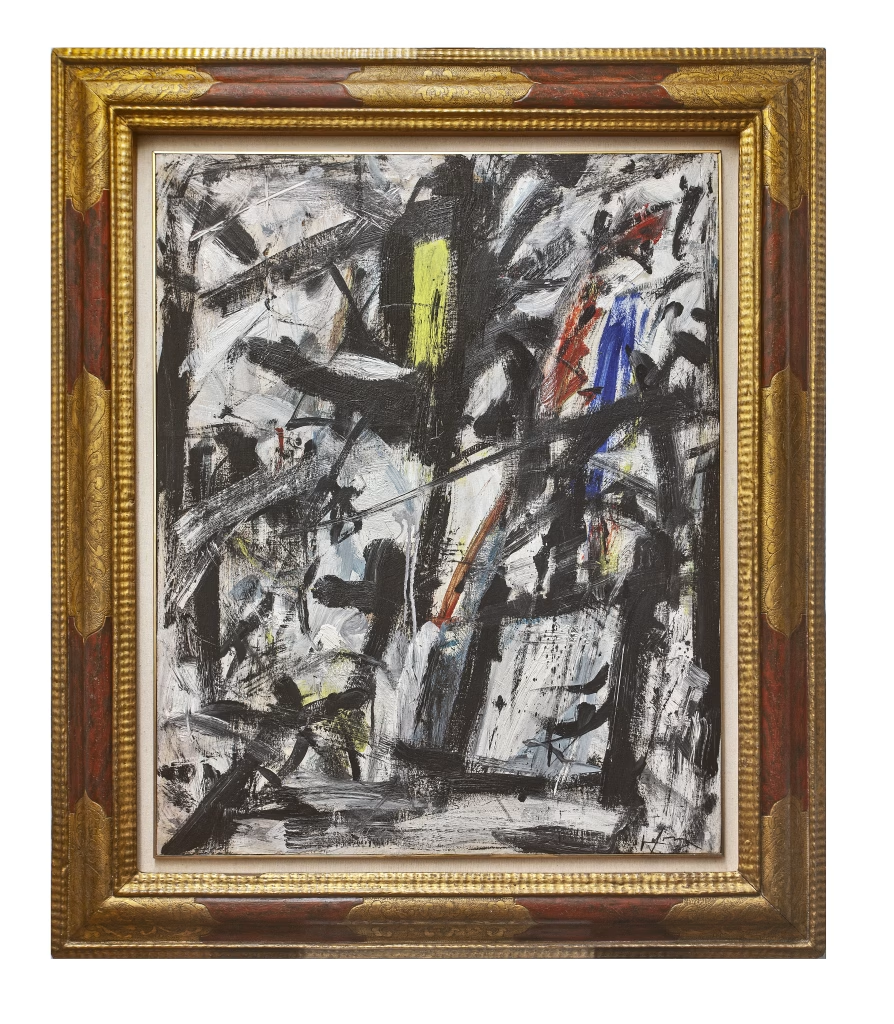
Vedova was a founding member of the Fronte Nuovo delle Arti, an avant-garde group active in post-war Italy that sought to renew painting through dynamic and expressive forms. In the 1950s, his work evolved into a gestural, action-oriented abstraction, characterized by energetic brushstrokes, dramatic contrasts, and a sense of controlled chaos. These canvases, often large-scale, evoke motion, struggle, and emotional intensity, aligning him with European Informalism and the wider currents of Abstract Expressionism.
Throughout his career, Vedova actively participated in major international exhibitions, including the Venice Biennale (where he represented Italy in 1964), Documenta in Kassel, and numerous solo and group exhibitions across Europe, the United States, and Japan. He also collaborated with architects and designers, creating murals and large-scale public works that integrated his expressive abstraction into architectural spaces.
Vedova’s work is held in prominent collections worldwide, including the Gallerie dell’Accademia in Venice, the Museum of Modern Art in New York, the Centre Pompidou in Paris, and the Galleria Nazionale d’Arte Moderna in Rome. His art continues to be celebrated for its radical energy, gestural power, and the ability to merge individual expression with collective human experience.
For information on available works by the artist, please contact the gallery.